At a Glance
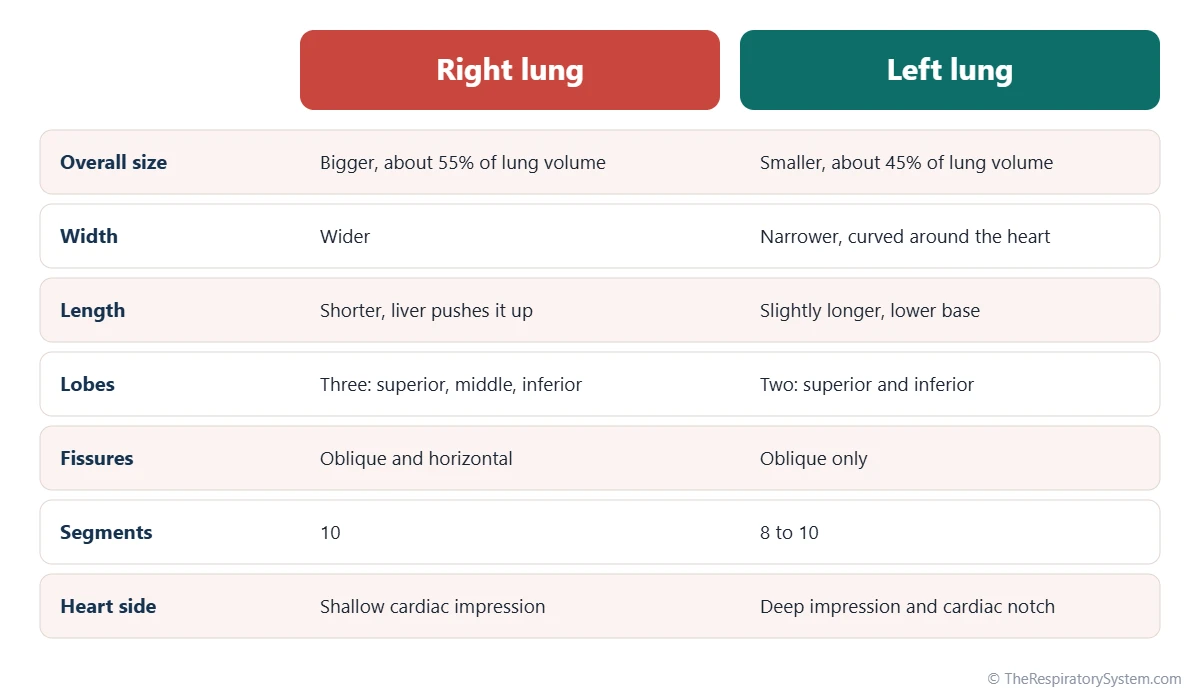
The right lung is the bigger lung. It holds about 55 percent of total lung volume, compared with about 45 percent for the left, and it has 3 lobes and 10 segments against the left lung's 2 lobes and 8 to 10 segments. The left lung is smaller because about two-thirds of the heart lies on the left side of the chest, although it is slightly longer because the liver pushes the right lung up from below.
- Bigger lung
- Right lung, about 55 percent of total lung volume
- Smaller lung
- Left lung, about 45 percent of total lung volume
- Main reason
- The heart leans to the left, so the left lung gives up space
- Longer lung
- Left lung, because the liver raises the right dome of the diaphragm
- Lobes
- Right: 3 (superior, middle, inferior); left: 2 (superior, inferior)
- Part of
- Lower respiratory tract
On this page
Which Lung Is Bigger, Left or Right?
The right lung is bigger than the left in almost every person: it has more volume, more lobes, more lung tissue and a little more weight. The difference is modest, roughly 55 percent of the total for the right and 45 percent for the left, so both lungs are close to the same size at first glance.
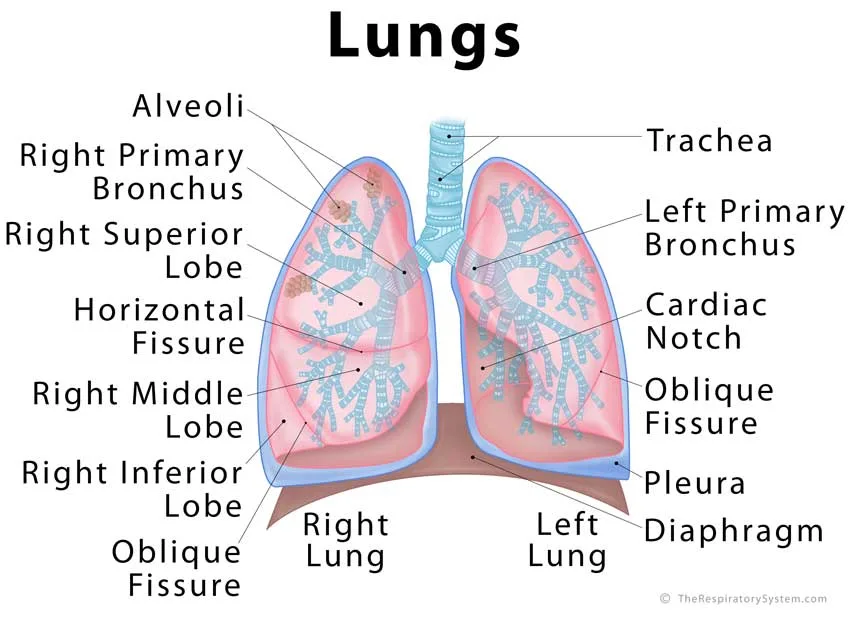
In everyday terms, the right lung is the wider, heavier one, and the left lung is the narrower, slightly taller one. The right lung is split into superior, middle and inferior lobes, while the left lung has only superior and inferior lobes, plus a small tongue of tissue called the lingula in place of a middle lobe.
Explained simply
Think of the chest as a box shared by three tenants: two lungs and the heart. The heart does not stand in the middle; it leans toward the left. That means the left lung has less room and grows slimmer, with a curved bite in its front edge where the heart sits. The right lung gets the extra space and ends up the bigger of the two.
Why Is the Right Lung Bigger Than the Left?
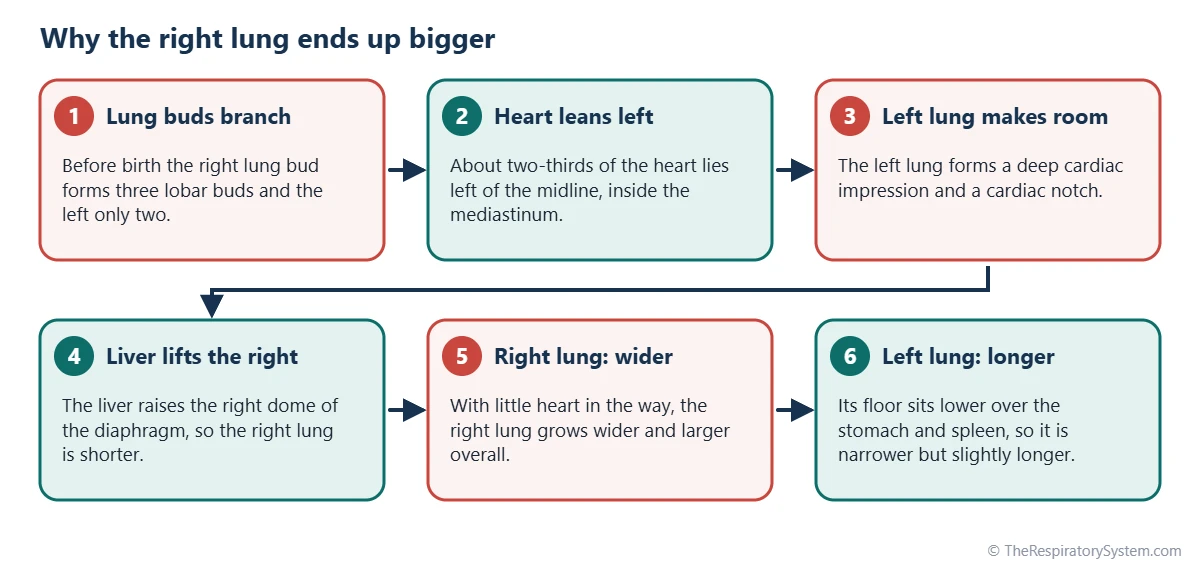
The right lung is bigger than the left because the heart sits toward the left side of the chest, so the left lung has to make room for it. About two-thirds of the heart lies left of the body's midline, and its apex points down and to the left, pressing into the left lung.
The heart takes space on the left
The heart lies in the mediastinum, the central compartment between the two lungs, but it bulges much further into the left side. The left lung responds with a deep hollow on its inner surface, the cardiac impression, and a curved gap in its front edge, the cardiac notch. Both features remove lung tissue that the right lung keeps.
The right side forms an extra lobe
The difference is built in before birth. Around the fifth week of development, the right lung bud branches into three lobar buds and the left into two, as described on our development of the respiratory system page. The right lung therefore gains a whole extra lobe, the middle lobe, while on the left the matching tissue stays small as the lingula.
More airways and segments
Because it has more tissue, the right lung also has more airway branches. It is usually divided into 10 bronchopulmonary segments, while the left lung has 8 to 10, depending on how its combined segments are counted.
Why Is the Left Lung Longer If the Right Lung Is Bigger?
The left lung is slightly longer because the liver pushes the right dome of the diaphragm higher than the left dome, which shortens the right lung from below. This is the source of the common belief that the left lung is bigger: it is taller, but it is not larger overall.
The liver is the largest organ in the abdomen and lies mostly under the right half of the diaphragm. It holds the right dome up, so the base of the right lung sits higher and is more deeply hollowed. On the left, the stomach and spleen lie under the diaphragm and let the left dome sit lower, so the left lung reaches a little further down.
Put together, the two effects give each lung its own shape:
- Right lung: shorter, because the liver lifts its floor, but wider, because the heart takes little room on the right.
- Left lung: narrower, because the heart presses into it, but slightly longer, because its floor sits lower.
Width wins over length, so the right lung still ends up with more volume.
| Feature | Right lung | Left lung |
|---|---|---|
| Share of total lung volume | About 55 percent | About 45 percent |
| Overall size | Larger | Smaller |
| Weight | Slightly heavier | Slightly lighter |
| Width | Wider | Narrower, shaped around the heart |
| Length | Shorter, pushed up by the liver | Slightly longer, with a lower base |
| Lobes | 3: superior, middle and inferior | 2: superior and inferior |
| Fissures | Oblique and horizontal | Oblique only |
| Bronchopulmonary segments | 10 | 8 to 10 |
| Space shared with the heart | Small, shallow cardiac impression | Large, deep cardiac impression and cardiac notch |
| Organ under the diaphragm | Liver | Stomach and spleen |
| Source: Typical adult values, our editors | ||
How Much Bigger Is the Right Lung?
The right lung is about 10 percentage points bigger than the left, holding roughly 55 percent of total lung volume and receiving a similar share of the air and blood that flow through the lungs. The exact split varies a little between people and with body position.
The same proportion shows up in several measurements. When doctors use scans to measure how air and blood are shared between the lungs, the right lung typically takes slightly more than half of both, which fits the idea of a ventilation-perfusion match on each side. On a CT scan the right lung also measures a larger volume of air-filled tissue. Since the total adult lung capacity is about 6 liters in an average man, as explained on our lung volumes and capacities page, the right lung holds only a few hundred milliliters more than the left.
The extra size does not make the right lung different in quality. Both lungs have the same kinds of airways, the same alveoli and the same thin walls for gas exchange; the right lung simply has more of them.
Which Structures Make the Two Lungs Different Sizes?
The structures that make the lungs different sizes are the heart, the liver, the diaphragm and the large blood vessels around the lung roots, all packed together inside the thoracic cavity. Each one pushes on one lung more than the other.
- Heart: leans left, creating the cardiac impression and cardiac notch of the left lung.
- Liver: lifts the right dome of the diaphragm and shortens the right lung.
- Aorta: arches over the root of the left lung and runs down behind it, leaving grooves on its inner surface.
- Main bronchi: the right main bronchus is short, wide and steep, while the left is longer and more horizontal because it must pass under the aortic arch; the bronchi page explains why this matters.
- Fissures: the right lung has an oblique and a horizontal fissure, while the left has only an oblique one; see lung fissures.
For the lobes themselves, the lung lobes guide compares each lobe of both lungs.
Is the Right Lung Bigger in Every Human?
The right lung is bigger in nearly all humans, but the overall size of both lungs varies with height, sex, age and fitness. Taller people have larger lungs, and on average men have larger lungs than women of the same height, yet the right-left difference stays about the same.
The main exception is situs inversus, a rare condition in which the organs of the chest and abdomen form a mirror image of the usual layout. The heart then leans to the right and the liver sits on the left, so the left lung has three lobes and is usually the larger one. Disease can also change the balance in one person, for example when part of one lung is scarred, collapsed or removed in surgery.
Other animals show the same pattern in different degrees. Many mammals, including dogs and cats, have more lobes on the right, among them a small accessory lobe tucked near the heart. To see how both lungs fill and empty with each breath, read how do the lungs work.
Key Facts
- The right lung is bigger than the left, holding roughly 55 percent of total lung volume against about 45 percent.
- The left lung is smaller because about two-thirds of the heart lies on the left side of the chest.
- The left lung is slightly longer, because the liver raises the right dome of the diaphragm and shortens the right lung.
- The right lung has 3 lobes and 10 segments; the left lung has 2 lobes and 8 to 10 segments.
- The cardiac notch and lingula of the left lung are the spaces and tissue left over around the heart.
- The size difference is set before birth, when the right lung bud branches into three lobes and the left into two.
- In situs inversus, a rare mirror-image layout, the left lung is usually the bigger, three-lobed lung.
Frequently Asked Questions
Is the right lung bigger in children and babies too?
Yes. The difference between the lungs is set during the fifth week of development, when the right lung bud forms three lobes and the left forms two. A newborn already has a larger, three-lobed right lung and a smaller left lung shaped around the heart. Both lungs then grow in proportion through childhood as new alveoli form and the chest gets bigger.
Does the right lung hold more air than the left?
Yes. Because it has more tissue and more alveoli, the right lung holds more air at every stage of a breath and receives slightly more than half of each breath in. In an average adult the difference is only a few hundred milliliters, so both lungs fill and empty together and neither one does all the work.
Which lung receives more blood?
The right lung usually receives a little more blood, roughly 55 percent of the flow from the right ventricle, which matches its larger share of air. The pulmonary trunk splits into a longer right pulmonary artery and a shorter left pulmonary artery. Blood flow and airflow are kept closely matched in both lungs so that gas exchange stays efficient on each side.
Does the bigger lung get sick more often?
Not in general. Both lungs are exposed to the same air and blood, so most lung diseases can affect either side. One exception is aspiration: food or small objects breathed in by mistake more often enter the right lung, because the right main bronchus is wider and more in line with the trachea. Size alone does not make the right lung weaker or more prone to illness.
Can one lung grow bigger to replace the other?
Partly. After one lung is removed, the remaining lung expands to fill more of the chest, and the heart and mediastinum shift toward the empty side. In young children the remaining lung can also grow new alveoli and recover much of the lost capacity. In adults the gain comes mostly from stretching, so total lung capacity stays lower than before surgery.
Which lung is bigger in other animals?
In most mammals the right lung is also the larger one. Dogs, cats, pigs and cattle have more lobes on the right, including a small accessory lobe near the heart. Snakes show the most extreme case, relying on a long right lung while the left is tiny or absent. Birds have a very different system of rigid lungs and air sacs, so the question does not apply in the same way.
Is the left lung bigger in some people?
Rarely. People with situs inversus have a mirror-image arrangement of the chest and abdominal organs, so the heart leans right and the left lung usually has three lobes and the larger volume. In others, the left lung can end up holding more air than the right when disease or surgery reduces the right lung, but in a typical healthy body the right lung is always larger.
Keep Exploring


