At a Glance
The respiratory system is the set of body parts you use to breathe: the nose and mouth, throat, voice box, windpipe, bronchi and lungs. It takes in oxygen, which every cell needs, and breathes out carbon dioxide, a waste gas. A big muscle under the lungs, the diaphragm, does most of the work, and a grown-up breathes about 12 to 20 times a minute at rest.
- Main job
- Get oxygen into your blood and carbon dioxide out
- Main parts
- Nose, mouth, throat, voice box, windpipe, bronchi, lungs
- Main muscle
- The diaphragm, under your lungs
- Where it is
- Your head, neck and chest
- Works with
- Your heart and blood vessels, which carry the oxygen
On this page
What Is the Respiratory System?
The respiratory system is the team of body parts that lets you breathe. Every time you breathe in, it pulls fresh air into your body. Every time you breathe out, it pushes used air back out.
Why does this matter? Your body is made of trillions of tiny cells. Each cell needs oxygen to turn food into energy.
Oxygen is a gas in the air, and you cannot see or smell it. When cells use oxygen, they make a waste gas called carbon dioxide. Your respiratory system brings oxygen in and carries carbon dioxide out.
Explained like you are 9: imagine your body is a busy city. Every house needs fresh air to keep its lights on. The respiratory system is like the city's air delivery service. It brings fresh air in and takes the stale air away. It never takes a day off, even when you sleep.
What Are the Parts of the Respiratory System?
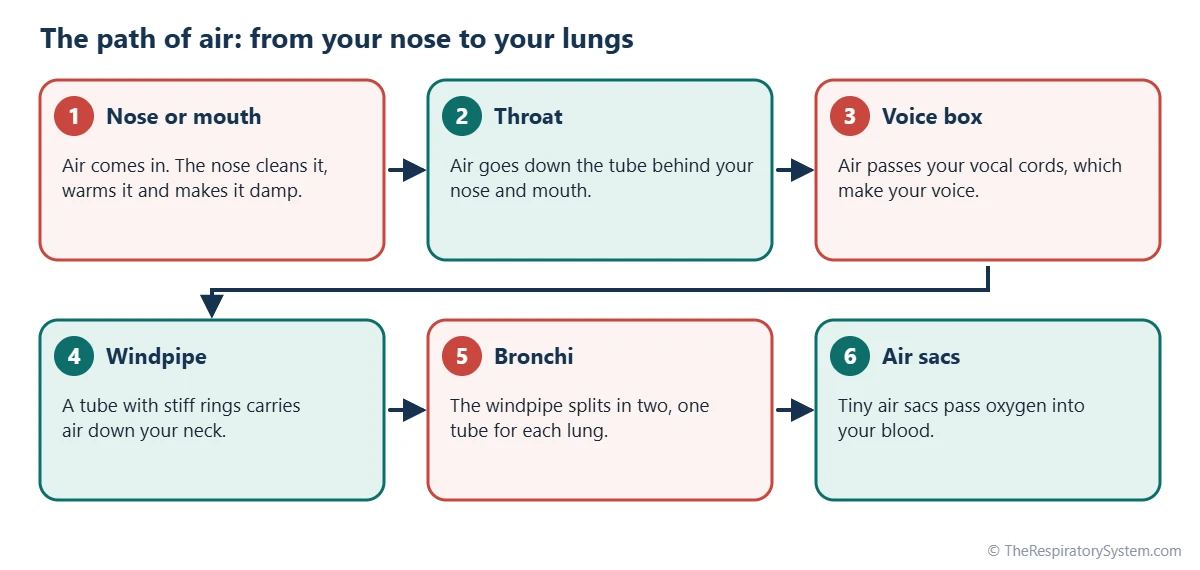
The main parts are the nose and mouth, throat, voice box, windpipe, bronchi and lungs. Air travels through them in that order, like cars on a road.
- Nose and mouth: the doors where air comes in. The nose is the best door, because it cleans the air.
- Throat: a tube behind your nose and mouth. Its science name is the pharynx.
- Voice box: the larynx holds your vocal cords. Air rushing past them makes your voice.
- Windpipe: the trachea is a tube in your neck. Stiff rings keep it from squashing flat.
- Bronchi: the windpipe splits into two bronchi, one for each lung.
- Lungs: two soft, spongy bags in your chest. They are full of tiny branching tubes and air sacs.
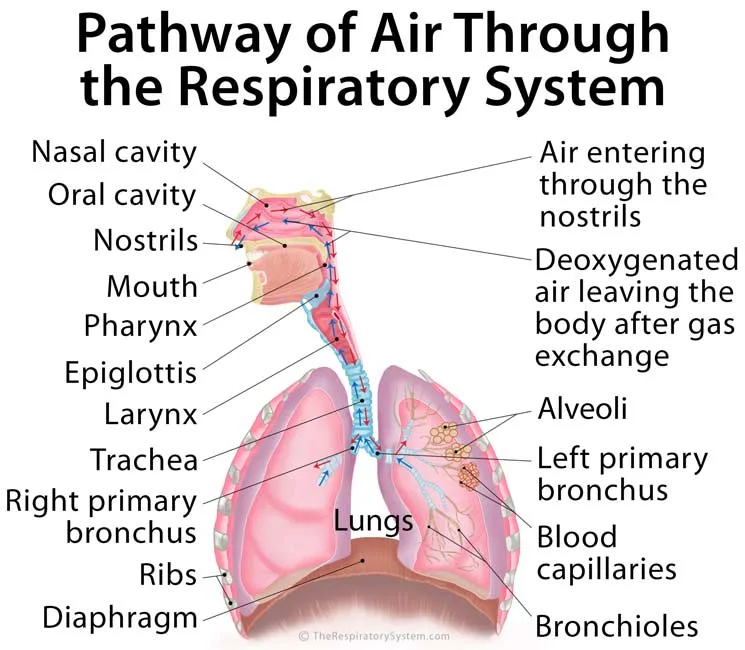
Under your lungs is a big, dome-shaped muscle called the diaphragm. It is the main muscle you use to breathe. Want to see every part with labels? Look at our respiratory system diagram.
| Part | Science name | Where it is | What it does |
|---|---|---|---|
| Nose | Nose and nasal cavity | Middle of your face | Lets air in and cleans, warms and wets it |
| Mouth | Oral cavity | Below your nose | A back-up door for air |
| Throat | Pharynx | Behind your nose and mouth | Carries air (and food) down your neck |
| Voice box | Larynx | Front of your neck | Makes your voice and guards the windpipe |
| Windpipe | Trachea | Your neck and upper chest | Carries air down to the lungs |
| Big air tubes | Bronchi | Inside your chest | Carry air into each lung |
| Tiny air tubes | Bronchioles | Inside your lungs | Spread air all through the lungs |
| Air sacs | Alveoli | At the ends of the tiny tubes | Swap oxygen and carbon dioxide with the blood |
| Breathing muscle | Diaphragm | Under your lungs | Moves down and up to pull air in and push it out |
| Source: Standard anatomy, our editors | |||
How Does Breathing Work?
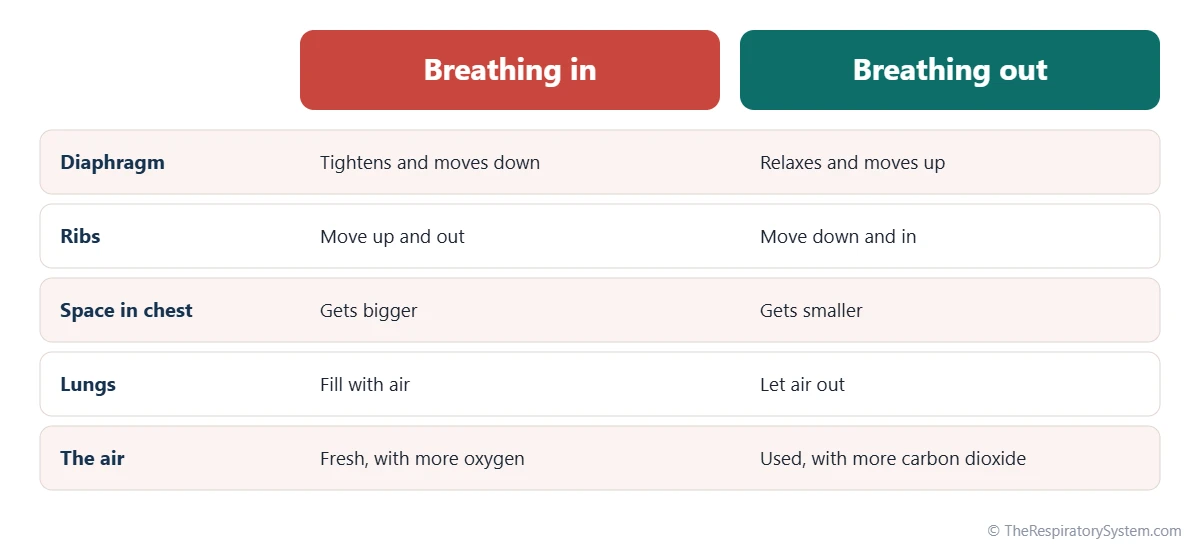
Breathing works because your diaphragm moves down and up. When it moves down, air rushes in. When it moves back up, air goes out.
Breathing in
When you breathe in, your diaphragm tightens and pulls down. Your ribs move up and out a little. This makes more space inside your chest. Air rushes in to fill that space, and your lungs get bigger.
Breathing out
When you breathe out, your diaphragm relaxes and moves back up. Your ribs move down and in. The space in your chest gets smaller. Air gets squeezed out, and your lungs get smaller again.
You do not have to think about breathing. Your brain does it for you, even while you sleep. When you run or play hard, your brain makes you breathe faster and deeper. That is because your muscles need more oxygen. Learn more on our inhalation and exhalation page.
What Do the Lungs Do?
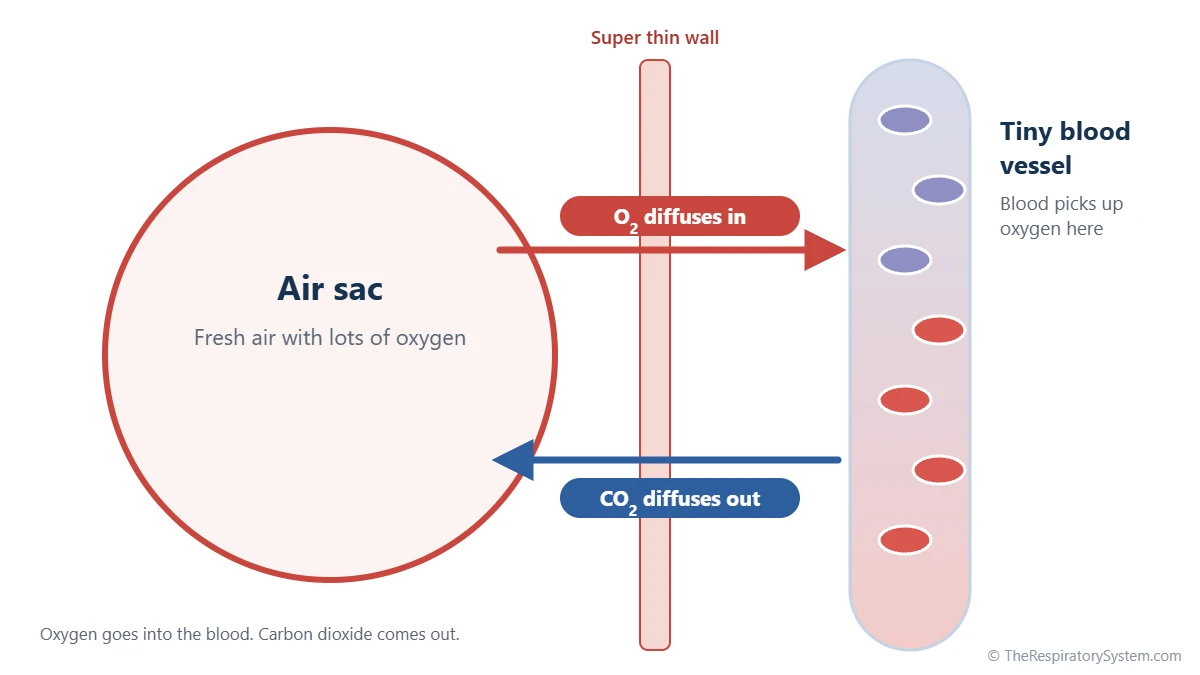
The lungs swap gases with your blood. They put oxygen into the blood and take carbon dioxide out of it.
Inside each lung, the bronchi split into smaller and smaller tubes. The tiniest tubes are called bronchioles. At the end of each one are tiny air sacs called alveoli. They look a bit like bunches of grapes. Your lungs have hundreds of millions of them!
Each air sac is wrapped in tiny blood vessels. The walls between the air and the blood are super thin. Oxygen slips through the walls into your blood.
Carbon dioxide slips the other way, into the air sac. Then you breathe it out. This swap is called gas exchange.
Your heart then pumps the oxygen-rich blood all around your body. That is how the lungs and heart work as a team. Read more in how the respiratory and circulatory systems work together.
How Does Your Body Keep the Air Clean?
Your airways clean the air with hairs, sticky mucus and tiny brushes called cilia. Dust and germs get caught before they reach your lungs.
- Nose hairs catch big bits of dust.
- Mucus is a sticky goo that traps tiny dust and germs.
- Cilia are tiny hairs on the cells lining your airways. They wave back and forth. They push the dirty mucus up and away from your lungs.
- Sneezing and coughing blast out things that bother your airways.
Your nose also warms the air and makes it damp. Warm, damp air is gentler on your lungs. Read more about cilia and mucus.
Sometimes germs get past these guards and make people sick. Colds and coughs are examples. A grown-up or doctor can help if breathing ever feels hard.
Fun Respiratory System Facts for Kids
Your respiratory system is full of surprises. Here are some fun facts to share with your class.
- Your left lung is a little smaller than your right lung. It leaves room for your heart. Find out more in which lung is bigger.
- Your right lung has three sections, called lobes. Your left lung has only two.
- Hiccups happen when your diaphragm suddenly jerks. Find out why on our why do we hiccup page.
- You cannot breathe and swallow at the same moment. A flap called the epiglottis covers your windpipe when you swallow.
- Healthy lungs can float on water, because they are full of air.
- The air you breathe out still has some oxygen in it.
- Most fish do not have lungs. They use gills to take oxygen from water. See how fish breathe.
Want more? Try our respiratory system facts page. You can also build a balloon lung model or print a respiratory system worksheet.
Key Facts
- You breathe about 20,000 times every day, without even thinking about it.
- Your lungs have hundreds of millions of tiny air sacs called alveoli.
- The diaphragm is the main muscle you use to breathe.
- Your nose cleans, warms and wets the air before it reaches your lungs.
- Every cell in your body needs oxygen, and your lungs help deliver it.
Quick Quiz: Test What You Know About the Respiratory System for Kids
5 questions. Tap an answer to check it.
What is the main muscle you use to breathe?
The diaphragm is a dome-shaped muscle under your lungs. It moves down to pull air in.
Which gas does your body need from the air?
Every cell needs oxygen to make energy. Your lungs pass it into your blood.
What is another name for the windpipe?
The windpipe is called the trachea. It carries air from your throat down to your lungs.
Where does oxygen move into your blood?
Oxygen moves into the blood in the tiny air sacs, called alveoli. Their walls are super thin.
What do the tiny hairs called cilia do?
Cilia wave back and forth. They sweep mucus, dust and germs up and away from your lungs.
Frequently Asked Questions
What is the function of the respiratory system for kids?
The respiratory system has one big job. It brings oxygen into your body and takes carbon dioxide out. Your cells need oxygen to make energy. Carbon dioxide is the waste they make. The respiratory system also helps you talk, smell and keep germs out. It does all this every time you breathe in and out.
What are the lungs for kids?
Your lungs are two soft, spongy organs inside your chest. They sit on each side of your heart, protected by your ribs. Inside, they are full of tiny tubes and air sacs. When you breathe in, they fill with air like balloons. Their job is to pass oxygen into your blood.
Why do we breathe faster when we run?
When you run, your muscles work very hard. Hard-working muscles need extra oxygen. They also make extra carbon dioxide. Your brain notices this and tells you to breathe faster and deeper. Your heart beats faster too. Together they bring more oxygen to your muscles. When you rest again, your breathing slows down.
Can you breathe through your mouth?
Yes, you can. Your mouth is a back-up door for air. It helps when your nose is stuffy or you need lots of air fast. But your nose is the better door. It cleans the air, warms it and makes it damp. The mouth cannot do this as well.
How do the respiratory system and the heart work together?
They are a great team. Your lungs put oxygen into your blood. Then your heart pumps that blood all around your body. Your cells take the oxygen they need. They give back carbon dioxide. The blood carries it back to your heart and lungs. Then you breathe it out.
Do animals have a respiratory system too?
Yes, almost all animals need oxygen. Dogs, cats and birds have lungs like you. Fish use gills to take oxygen from water. Insects breathe through tiny holes along their sides. Earthworms breathe right through their damp skin. Each animal has a way that fits where it lives.
Keep Exploring


