At a Glance
The respiratory system depends on the muscular system (the diaphragm and intercostal muscles move air), the nervous system (the brainstem controls breathing rate and depth) and the circulatory system (blood carries oxygen to cells and carbon dioxide back). It shares the pharynx with the digestive system, relies on the skeleton for protection and works with the kidneys to keep blood pH steady.
- Muscular system
- Diaphragm and intercostal muscles power breathing
- Nervous system
- Brainstem sets the rhythm; phrenic nerve drives the diaphragm
- Circulatory system
- Carries oxygen from the lungs and carbon dioxide back to them
- Digestive system
- Shares the pharynx; supplies the fuel cells burn with oxygen
- Skeletal system
- Rib cage protects the lungs and moves with each breath
- Urinary system
- Kidneys and lungs balance blood pH together
On this page
- How Does the Respiratory System Work With Other Body Systems?
- How Does the Respiratory System Work With the Muscular System?
- What Is the Effect of Exercise on the Respiratory and Muscular Systems?
- How Does the Respiratory System Work With the Nervous System?
- How Does the Respiratory System Work With the Circulatory System?
- How Does the Respiratory System Work With the Digestive System?
- How Does It Work With the Skeletal, Immune, Urinary and Endocrine Systems?
- What Happens When a Partner System Does Not Work Properly?
- Key Facts
- FAQ
How Does the Respiratory System Work With Other Body Systems?
The respiratory system works with other body systems because its single product, oxygen-rich blood cleared of carbon dioxide, is useless unless other systems move the air, control the rhythm, deliver the gases and use them. In return, every other system depends on that oxygen supply to stay alive.
The lungs take in oxygen and release carbon dioxide, but they have no muscles to pump air, no way of timing a breath and no way of carrying oxygen to a toe. Those jobs belong to the muscular, nervous and circulatory systems. The table below shows what each system gives and receives, and the sections that follow explain the most important partnerships.
Explained simply
Think of the body as a team. The lungs are the team's oxygen station, but they need the muscles to pump air in, the brain to call the plays, the blood to deliver oxygen to every player, and the stomach and intestines to supply the food that oxygen helps burn. If one player stops, the whole team struggles.
| Body system | Key structures | How it helps the respiratory system | What it gets in return |
|---|---|---|---|
| Muscular | Diaphragm, intercostal, accessory and abdominal muscles | Changes the size of the chest to move air | Oxygen for contraction; removal of carbon dioxide |
| Nervous | Brainstem, phrenic nerve, vagus nerve, chemoreceptors | Sets the rate and depth of breathing; triggers protective reflexes | A steady oxygen supply for the brain |
| Circulatory | Heart, pulmonary arteries and veins, capillaries, red blood cells | Carries oxygen to cells and carbon dioxide to the lungs | Oxygen-rich blood to pump to the body |
| Digestive | Mouth, pharynx, esophagus, stomach, intestines | Supplies glucose and other fuels for cellular respiration | Oxygen to release energy from those fuels |
| Skeletal | Ribs, sternum, thoracic spine, skull, bone marrow | Protects the lungs, anchors breathing muscles, makes red blood cells | Oxygen for bone cells and marrow |
| Immune and lymphatic | Tonsils, adenoids, alveolar macrophages, lymph nodes | Defends the airways and drains excess lung fluid | A clean, moist surface that traps germs |
| Urinary | Kidneys | Fine-tunes blood pH; releases erythropoietin when oxygen is low | Fast pH control by breathing out carbon dioxide |
| Endocrine | Adrenal glands, kidneys | Adrenaline widens airways and speeds breathing | Angiotensin II made in the lung capillaries |
| Source: Typical adult physiology, our editors | |||
How Does the Respiratory System Work With the Muscular System?
The respiratory system and muscular system work together in two directions: muscles power every breath, and the respiratory system supplies the oxygen that muscles need to contract. The lungs contain no skeletal muscle, so without the muscular system no air would move at all.
Muscles that move air
- Diaphragm: the dome-shaped muscle under the lungs does most of the work of quiet breathing. When it contracts, it flattens and pulls air in.
- Intercostal muscles: the external intercostals lift the ribs for inhalation; the internal intercostals help pull them down during forced exhalation.
- Accessory muscles: neck muscles such as the scalenes and sternocleidomastoid join in during heavy breathing.
- Abdominal muscles: they push the diaphragm up during a forceful breath out, a cough or a shout.
Smooth muscle, a second type of muscle tissue, lines the walls of the bronchi and bronchioles and changes their width. The full list is on our muscles of respiration page.
Oxygen for working muscles
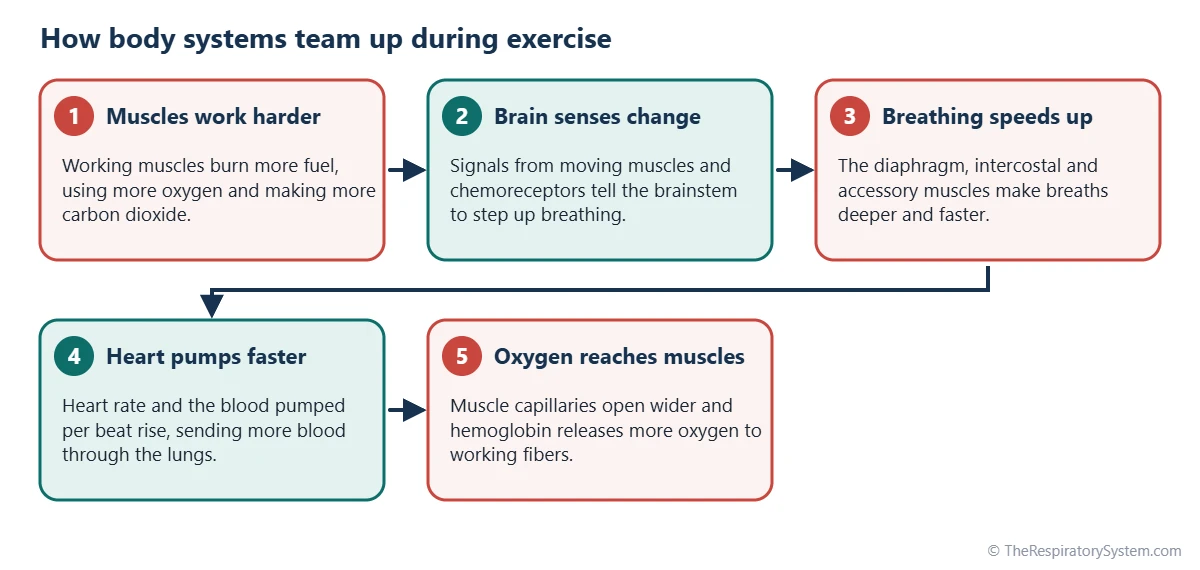
Skeletal muscles release energy from glucose and fats through cellular respiration, which uses oxygen and produces carbon dioxide. The harder a muscle works, the more oxygen it needs and the more carbon dioxide it adds to the blood, and the respiratory system must keep pace.
What Is the Effect of Exercise on the Respiratory and Muscular Systems?
During exercise, working muscles demand more oxygen and produce more carbon dioxide, so breathing becomes deeper and faster and the heart pumps more blood through the lungs and muscles. The amount of air moved each minute can rise more than tenfold during hard exercise compared with rest.
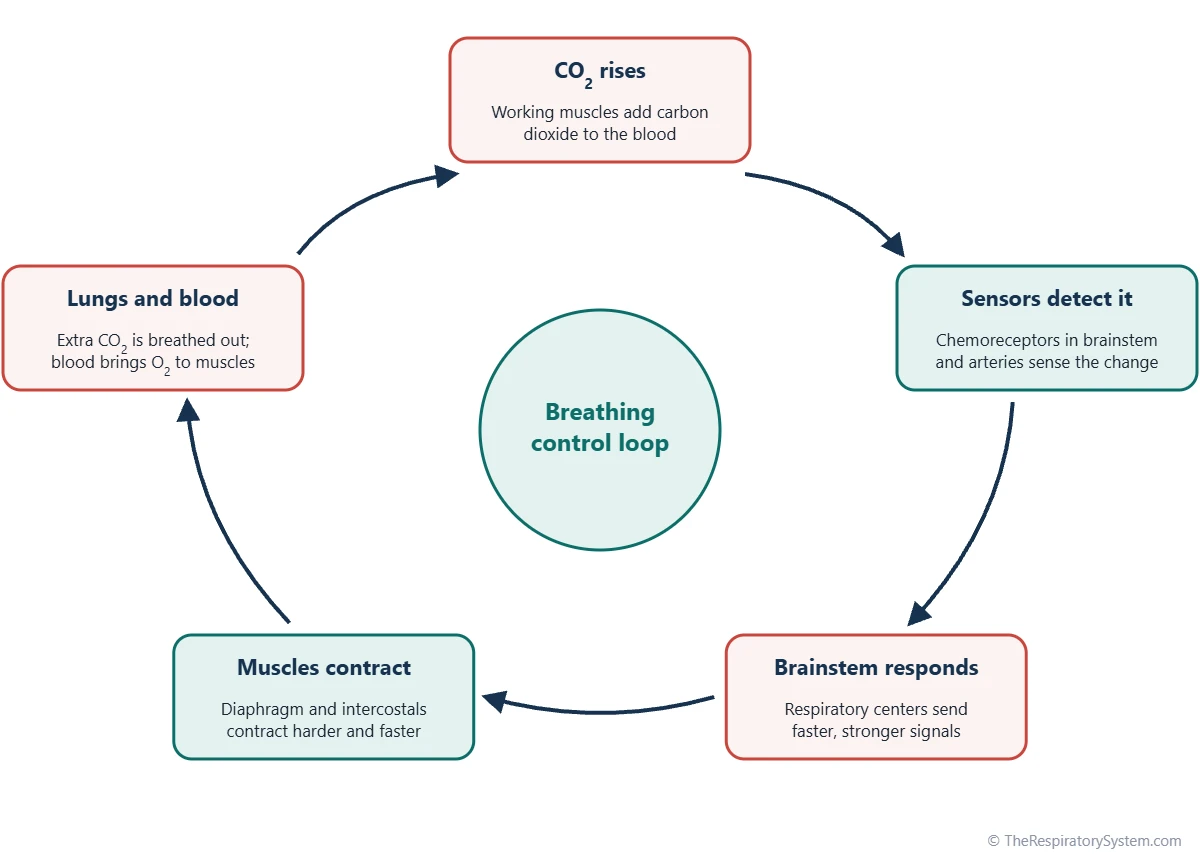
At the start of exercise, breathing increases almost at once, partly because signals from the brain and from moving joints and muscles reach the respiratory centers. As exercise continues, rising carbon dioxide fine-tunes the response. When oxygen delivery cannot keep up with very intense effort, muscles rely more on energy pathways that do not use oxygen and build up lactate, which is one reason breathing stays fast for a while after stopping.
With regular training, the breathing muscles become stronger and more resistant to fatigue, and working muscles grow more capillaries and mitochondria, so they extract oxygen more efficiently. The size of the lungs themselves changes very little. Our page on how exercise affects the respiratory system covers these changes in detail.
How Does the Respiratory System Work With the Nervous System?
The nervous system controls the respiratory system: groups of neurons in the brainstem set the rhythm and depth of every breath, and nerves carry those commands to the breathing muscles. In return, the respiratory system supplies the brain with the oxygen it needs every second; the brain uses about a fifth of the body's oxygen at rest.
- Respiratory centers: neurons in the medulla oblongata and pons generate the automatic breathing rhythm, as described in control of breathing.
- Motor nerves: the phrenic nerve, which arises from the neck at the level of the third to fifth cervical nerves, drives the diaphragm; intercostal nerves drive the rib muscles.
- Sensors: chemoreceptors in the brainstem and in the carotid and aortic bodies track carbon dioxide, oxygen and acidity, while stretch receptors in the lungs report how full they are through the vagus nerve, the basis of the Hering-Breuer reflex.
- Reflexes: the cough reflex and sneezing clear the airways automatically.
- Autonomic control: sympathetic activity, mostly through adrenaline carried in the blood, widens the bronchioles, while parasympathetic fibers in the vagus nerve narrow them.
The nervous system also uses the airways for the sense of smell and for speech, which requires precise control of airflow through the larynx.
How Does the Respiratory System Work With the Circulatory System?
The circulatory system carries the oxygen picked up in the lungs to every cell and brings carbon dioxide back to the lungs to be breathed out. The right side of the heart pumps oxygen-poor blood through the pulmonary circulation, where gas exchange reloads it, and the left side sends the oxygen-rich blood to the body. This partnership is so close that it has its own page: how the respiratory and circulatory systems work together.
How Does the Respiratory System Work With the Digestive System?
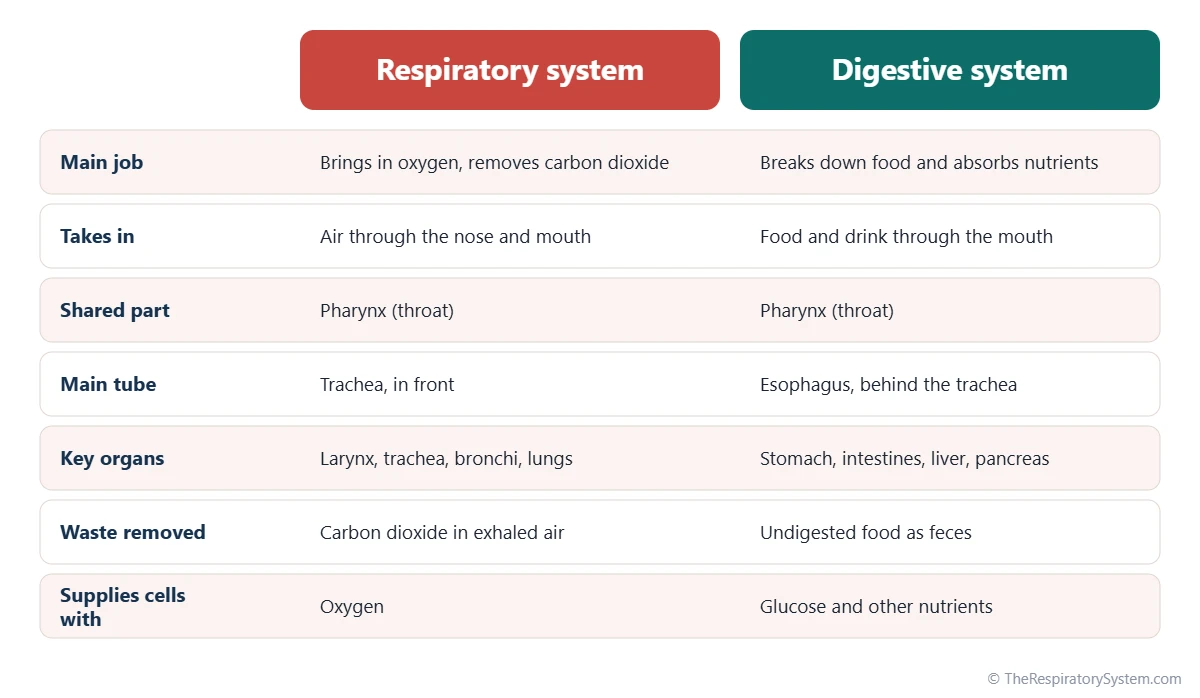
The respiratory and digestive systems share the pharynx, take turns using it through the swallowing reflex, and work as partners in energy production: the digestive system supplies glucose and other fuels, and the respiratory system supplies the oxygen that cells use to release energy from them.
A shared passage
Air and food both pass through the pharynx. When you swallow, the larynx rises, the epiglottis tips over the airway opening and breathing pauses for a moment, so food enters the esophagus behind the trachea instead of the airway. The trachea vs esophagus page compares the two tubes.
Fuel and oxygen
Inside cells, glucose from digested food reacts with oxygen in cellular respiration, releasing energy and producing carbon dioxide and water. The digestive system cannot power the body without the oxygen, and the oxygen is of no use without the fuel.
Other links
The esophagus passes through an opening in the diaphragm to reach the stomach, described on our openings of the diaphragm page. A very full stomach can press up on the diaphragm and make deep breaths feel harder. The two systems are also related by origin: the lungs first appear in the embryo as a bud growing from the front of the early gut tube.
How Does It Work With the Skeletal, Immune, Urinary and Endocrine Systems?
The skeletal, immune, urinary and endocrine systems each support breathing in a specific way: the skeleton protects and moves the chest, the immune system defends the airways, the kidneys share control of blood pH, and hormones adjust airway width and breathing rate.
- Skeletal system: the rib cage, sternum and thoracic spine shield the lungs and heart and give the breathing muscles something to pull on. The skull houses the nasal cavity and sinuses, and red bone marrow makes the red blood cells that carry oxygen.
- Immune and lymphatic systems: the mucus-covered respiratory epithelium, the tonsils and adenoids, and alveolar macrophages catch germs and dust. Lymph vessels drain excess fluid from the lungs toward lymph nodes near the hilum.
- Urinary system: the lungs and kidneys both control the acidity of the blood. The lungs adjust carbon dioxide within minutes, while the kidneys adjust bicarbonate over hours to days. When oxygen is low, the kidneys release erythropoietin, a hormone that raises red blood cell production, as happens at high altitude.
- Endocrine system: adrenaline from the adrenal glands widens the airways and speeds breathing during stress. The lung capillaries, in turn, convert a hormone called angiotensin I into angiotensin II, which helps regulate blood pressure.
All of these partnerships serve one goal, keeping the internal environment stable, which is the subject of how the respiratory system maintains homeostasis.
What Happens When a Partner System Does Not Work Properly?
Because breathing depends on several systems, problems in the muscles, nerves, heart or blood can affect breathing even when the lungs themselves are healthy. Our respiratory diseases section covers conditions of the lungs and airways, and anyone with breathing symptoms should see a doctor.
- Muscles and nerves: diseases that weaken the breathing muscles, or injuries to the upper spinal cord or the phrenic nerve, can reduce how much air the lungs receive.
- Heart: when the heart pumps poorly, fluid can back up into the lungs and make breathing harder.
- Blood: in anemia there are too few red blood cells or too little hemoglobin, so less oxygen reaches the tissues even with normal breathing.
- Brain: some medicines and brain injuries can slow the breathing rhythm; the result, hypoventilation, lets carbon dioxide build up.
Key Facts
- The lungs have no skeletal muscle; the diaphragm and intercostal muscles of the muscular system move every breath.
- Neurons in the medulla oblongata and pons set the breathing rhythm, as explained in control of breathing.
- The phrenic nerve, from the third to fifth cervical nerves, is the nerve that drives the diaphragm.
- The circulatory system carries oxygen from the lungs to the cells and returns carbon dioxide to be breathed out.
- The respiratory and digestive systems share the pharynx, and breathing pauses briefly during each swallow.
- The lungs adjust blood acidity within minutes by changing carbon dioxide, while the kidneys adjust it over hours to days.
- During hard exercise, the amount of air moved each minute can rise more than tenfold compared with rest.
Frequently Asked Questions
What body systems work with the respiratory system?
Almost every body system works with the respiratory system. The most important partners are the muscular system, which moves air; the nervous system, which controls breathing; and the circulatory system, which carries the gases. The digestive, skeletal, immune, urinary and endocrine systems also support breathing, and all of them depend on the oxygen it supplies.
Why do you breathe faster when you exercise?
Working muscles use more oxygen and produce more carbon dioxide. Sensors in the brainstem and arteries detect the change, and signals from moving muscles and joints add to it, so the brainstem sends faster and stronger commands to the breathing muscles. Deeper, faster breaths bring in more oxygen and remove the extra carbon dioxide, keeping blood levels close to normal.
Can you breathe and swallow at the same time?
No. Each time you swallow, breathing stops for a fraction of a second while the larynx rises and the epiglottis covers the airway. This short pause keeps food and liquid out of the trachea. It is so brief that it usually goes unnoticed, and the breath that follows a swallow is most often a breath out, which helps clear the entrance to the larynx.
What happens to breathing if the diaphragm stops working?
If the diaphragm cannot contract, the other breathing muscles must take over, and they are much weaker. One side of the diaphragm can stop working without serious trouble at rest, but losing both sides makes breathing very difficult. Injuries to the upper spinal cord or both phrenic nerves can cause this, and people affected may need machines to help them breathe.
How does the respiratory system help the digestive system?
The respiratory system supplies the oxygen that cells use to release energy from digested food. The digestive organs themselves also need oxygen to contract their muscles, make enzymes and absorb nutrients. In addition, the diaphragm and abdominal muscles, which take part in breathing, raise the pressure in the abdomen during actions such as coughing, vomiting and passing stool.
Does the skin help with breathing?
In humans the skin takes in only a very small amount of oxygen, far too little to matter for survival, so it is not counted as a breathing organ. Some animals rely on it much more: frogs exchange a large share of their gases through their thin, moist skin. In people, skin and airways mainly share a protective role as barriers against germs.
How does the respiratory system help maintain homeostasis?
The respiratory system keeps blood oxygen, carbon dioxide and acidity within narrow limits. When carbon dioxide rises, the blood becomes more acidic, and faster breathing removes the extra carbon dioxide within minutes. When carbon dioxide falls too low, breathing slows. This constant adjustment, working with the kidneys and the nervous system, keeps the internal environment stable.
Which body system controls breathing?
The nervous system controls breathing. Automatic breathing comes from respiratory centers in the brainstem, mainly the medulla oblongata, with help from the pons. The cerebral cortex can override this rhythm for a short time when you speak, sing or hold your breath, but rising carbon dioxide eventually forces the automatic control to take over again.
Keep Exploring


